They Learned Minimalism in Japan. Now They're Selling It Back to America.
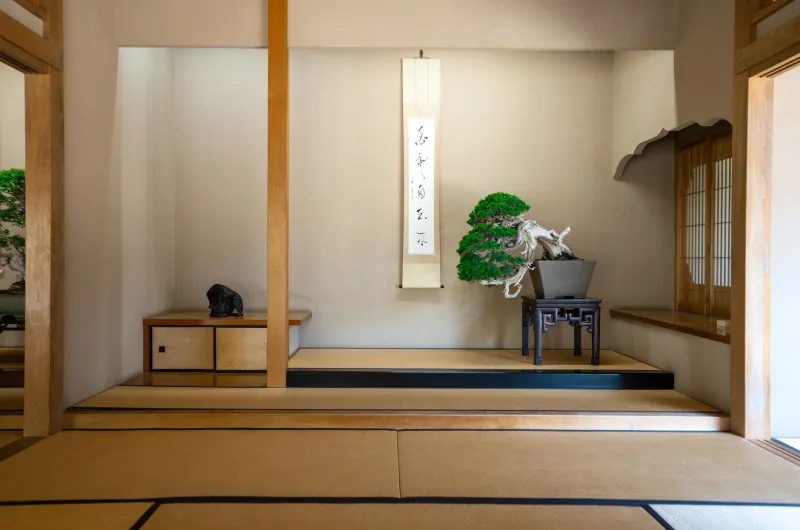
Somewhere between a ryokan in Kyoto and a design-forward apartment in Azabu, something clicks for a certain kind of American traveler. The clutter that seemed normal back home starts to feel unbearable. The noise, the accumulation, the relentless more-ness of American consumer culture—it all comes into sharp relief against the Japanese aesthetic of deliberate, breathing space.
And then they come home and start a Substack about it.
This is only a slight exaggeration. Over the past several years, a notable number of US-based entrepreneurs, interior designers, wellness coaches, and lifestyle content creators have built businesses explicitly rooted in Japanese minimalism, zen-adjacent practices, and the kind of spare, intentional design philosophy that neighborhoods like Azabu quietly embody. The market, it turns out, is enormous. Americans are hungry for the idea of less—they just want someone to show them how.
From Ryokan to Revenue
The pipeline usually looks something like this: an American spends time in Japan, either as a tourist, an expat, or a student. They absorb—sometimes consciously, sometimes not—the visual and philosophical principles that define Japanese domestic life. Ma, the concept of negative space. Wabi-sabi, the beauty found in imperfection and impermanence. The ryokan's studied restraint, where every object in a room has earned its place.
They return to the US. They look at their apartment, their closet, their schedule. They start editing. And eventually, enough people ask them how they did it that a business emerges.
Take Claire, a 37-year-old interior consultant based in Portland who spent four years living in Tokyo, including a stretch in Azabu. She now runs a design practice that she describes as "Japanese-influenced American living"—helping clients strip their homes down to what she calls "intentional essentials." Her waiting list is six months long.
"The Azabu years changed how I see space entirely," she says. "In that neighborhood especially, there's this sense that restraint is a form of respect—for the space, for the objects in it, for the people living there. I couldn't unsee it once I came home."
The Wellness Angle
It's not just interiors. The Japanese minimalism wave has rolled through the American wellness industry with considerable force. Breathwork instructors cite zen practice. Life coaches reference the Japanese concept of ikigai—roughly, the intersection of what you love, what you're good at, what the world needs, and what you can be paid for. Decluttering consultants invoke the spirit of KonMari even when they've moved beyond Marie Kondo's specific methodology.
Jordan, a 31-year-old wellness educator from Nashville who spent two years in Tokyo, now runs weekend retreats in Tennessee that blend meditation, intentional movement, and what he calls "spatial philosophy"—essentially, teaching participants to think about their physical environments as extensions of their mental state.
"The Japanese understanding of how space affects the mind is genuinely sophisticated," he says. "It's not a trend over there. It's just how people live. I wanted to bring that depth to what I was teaching, because American wellness culture tends to be very surface-level."
His retreats sell out. A single weekend runs $800 per person.
The Authenticity Question
Here's where it gets complicated, and it's worth sitting with the discomfort for a moment. Japan has a long, well-documented history of watching its cultural exports get absorbed, repackaged, and sold back to global markets in ways that strip out the context. Minimalism as an aesthetic choice—clean lines, neutral tones, a single perfect ceramic bowl on an otherwise empty shelf—is not the same as minimalism as a lived philosophy rooted in specific historical, spiritual, and socioeconomic conditions.
Some of the Americans building businesses around these ideas are thoughtful about this distinction. Claire credits specific Japanese designers and architects when she talks about her influences. Jordan has studied zen practice formally and is transparent about what he doesn't know. They're doing the work.
Others are less rigorous. The Instagram aesthetic of "Japandi" (a hybrid of Japanese and Scandinavian design that has exploded in American home décor) often has almost nothing to do with Japan beyond a vague visual resemblance. Calling something "zen" has become essentially meaningless in American wellness marketing. The depth gets lost in the translation, and what remains is a mood board.
"There's a version of this that's genuine and a version that's cosplay," Claire says, diplomatically. "I think consumers are getting better at telling the difference."
Is the Trend Sustainable?
The honest answer is: some of it is, some of it isn't. The aesthetic wave—the neutral palettes, the decluttered feeds, the linen everything—will crest and recede like all aesthetics do. We've been here before with mid-century modern, with hygge, with the whole Kinfolk era of aspirational simplicity.
But something deeper might actually stick. The Americans who spent real time in Japan—who lived in neighborhoods like Azabu long enough to absorb the philosophy rather than just the look—are bringing back something more durable than a design trend. They're bringing back a different relationship to accumulation, to noise, to the idea that more is inherently better.
In a cultural moment when Americans are genuinely reconsidering their consumption habits, that message has real resonance. The question isn't whether the market will sustain it—clearly it will, at least for a while. The question is whether the people selling it are also living it.
For the ones who actually left Tokyo reluctantly, who still miss the particular quiet of an Azabu evening, who keep a single ceramic cup on their kitchen shelf not because it photographs well but because it's the one they brought back and it's the only one they need—for those people, the answer is probably yes.
For everyone else, well. The waiting list is six months long either way.