Wabi-Sabi Goes West: How Azabu's Quiet Luxury Is Rewriting the Rules of American Interior Design
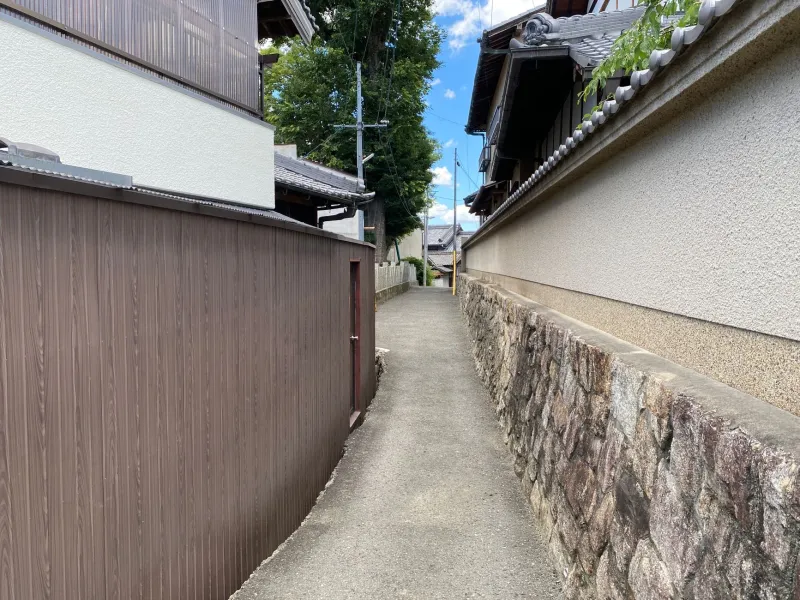
There's a particular kind of Instagram post that's been flooding the feeds of America's design-obsessed upper crust lately. It's not a Milanese showroom. It's not a Malibu compound with ocean views. It's a narrow Tokyo alley, barely wide enough for two people to pass, framed by a moss-covered stone wall and the understated facade of a building that costs more per square foot than most Americans will earn in a lifetime. The caption usually reads something vague and aspirational — found it — with a location tag: Azabu, Tokyo.
If you've been paying attention, you already know that Azabu isn't just a neighborhood. It's a mood. And right now, that mood is selling.
The Neighborhood That Doesn't Need to Announce Itself
For the uninitiated, Azabu — specifically Minami-Azabu and Azabu-Juban — sits in the Minato ward of central Tokyo, tucked between Roppongi's neon chaos and Hiroo's diplomatic calm. It's where foreign embassies cluster alongside century-old tofu shops, where a third-generation lacquerware craftsman might have a studio two doors down from a hedge fund manager's pied-à-terre. The neighborhood has always attracted old money and international residents, but it has never, ever tried to impress you. That restraint is precisely the point.
And that restraint, it turns out, is exactly what LA's influencer class has been desperately searching for.
"There's a fatigue with maximalism," says one Los Angeles-based interior stylist who asked to remain unnamed because, as she put it, "everyone in this industry is copying each other right now and I'd rather not tip my hand." She visited Azabu twice in the past eighteen months, both times returning with mood boards, fabric swatches, and an almost evangelical commitment to what she calls "intentional negative space." Her clients — a roster that includes entertainment executives and a few recognizable faces from reality television — are eating it up.
When Authenticity Becomes a Luxury Good
The irony of Western wealth chasing Japanese authenticity isn't lost on anyone who's spent time in Azabu. The neighborhood's appeal has always been rooted in things that can't be easily purchased: generations of craft knowledge, a cultural philosophy that values the patina of age over the shine of the new, an architectural language that treats emptiness as a feature rather than a flaw.
But money has a way of finding workarounds.
Over the past two years, a quiet industry has emerged connecting American buyers with Azabu-adjacent artisans — woodworkers, ceramicists, textile makers — who produce bespoke pieces for export. Some of these collaborations are genuinely respectful, the result of sustained relationships and fair compensation. Others are less so, amounting to little more than aesthetic strip-mining: take the look, leave the context.
The distinction matters, and it's one that more American consumers are beginning to grapple with, at least publicly. "I wanted the real thing, not a knockoff," says Marcus T., a tech entrepreneur from Scottsdale who commissioned a custom shoji screen installation for his home office after a business trip brought him through Azabu last spring. He worked directly with a third-generation woodworker in Minami-Azabu, communicating through a translator for months before the piece was completed. "It took forever, it cost a lot, and I would do it again in a heartbeat. There's something in that object that you just can't get from a design store in Venice Beach."
The Instagram Pipeline
Social media, predictably, is both the messenger and the distorter here. Azabu has become a reliable backdrop for a certain kind of aspirational content — the kind that signals taste rather than wealth, or at least tries to. A stone garden at dusk. A hand-thrown ceramic cup on a hinoki wood counter. The particular quality of afternoon light through paper screens.
What gets lost in the scroll, of course, is everything that makes those images possible: the decades of craft, the philosophical framework of wabi-sabi (the acceptance of imperfection and impermanence), the cultural specificity that gives these objects their weight. What arrives in American living rooms, more often than not, is the surface without the depth — a vibe without a vocabulary.
That's not nothing, to be fair. Design trends have always traveled this way, stripped of context and reassembled elsewhere. Japanese minimalism influenced Scandinavian design, which influenced American modernism, which influenced a thousand IKEA catalogs. The chain of aesthetic borrowing is long and tangled.
But there's something worth examining in the current moment's particular intensity. When A-list celebrities are flying to Tokyo specifically to tour Azabu architecture, when interior design publications are running dedicated features on "the Azabu palette," when a neighborhood that has existed in quiet distinction for generations suddenly becomes a trend — something has shifted.
What American Homes Are Actually Adopting
Set aside the philosophical debate for a moment and look at what's actually changing in American interiors. The Azabu influence, filtered through the taste-making machinery of LA and New York, tends to manifest in a few consistent ways.
Natural materials — unfinished wood, handmade ceramics, stone with visible grain — are replacing the high-gloss surfaces that dominated the previous decade. Furniture is lower to the ground, more considered, with fewer pieces per room. Color palettes are pulling toward warm neutrals, aged whites, and the muted greens of moss and lichen. Lighting is softer, more diffuse, more likely to come from a handcrafted paper fixture than a designer chandelier.
These aren't bad choices. In many cases, they represent a genuine improvement in the quality and thoughtfulness of American domestic spaces. The question is whether the design philosophy that produced them can survive the journey, or whether it arrives as just another trend cycle, destined to be replaced by the next Instagram-fueled obsession.
A Neighborhood That Watches, Quietly
Back in Azabu, the neighborhood itself remains largely indifferent to its new status as a Western design muse. The tofu shop still opens at dawn. The stone walls still gather moss. The craftsmen still work at the pace that good work requires.
If the residents of Azabu have noticed that their home has become a mood board for American influencers, they haven't made much of a fuss about it. That, too, feels very Azabu.
The real question for American consumers isn't whether to draw inspiration from this extraordinary place — inspiration is free, and Azabu is genuinely inspiring. It's whether the borrowing can be done with enough curiosity and respect to produce something meaningful, rather than just something photogenic.
The difference, as any good designer will tell you, is everything.