The Anime Blueprint: How Japanese Storytelling Cracked the Code That Hollywood Has Been Chasing for Years
Something Happened in the Writers' Room
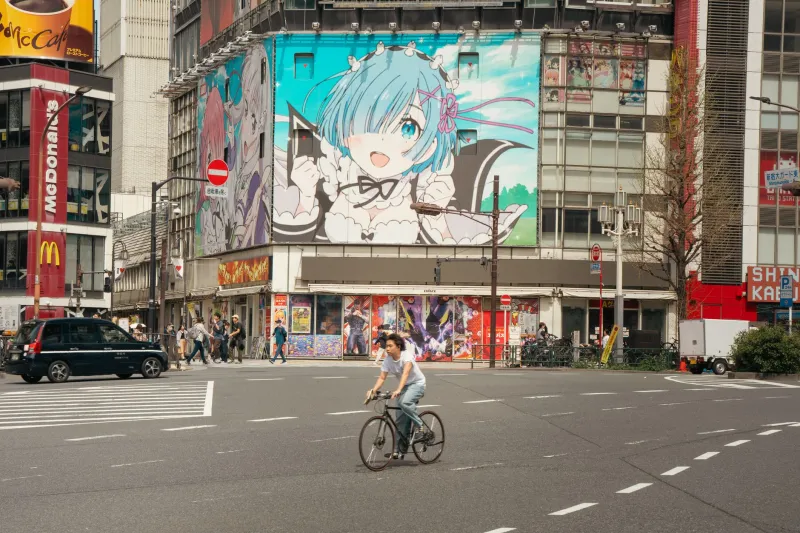
There's a conversation happening quietly in entertainment circles that doesn't always make it into the trades. It goes something like this: the storytelling approaches that have been generating the most passionate, durable fan engagement over the past decade didn't originate in Hollywood. They came from Akihabara. From Weekly Shonen Jump. From visual novel developers in Osaka working on games that most American executives had never heard of.
Japanese anime, manga, and interactive fiction have always had devoted audiences in the US. But something has shifted. The influence has moved upstream—from fan culture into the actual production infrastructure of American entertainment. Screenwriters are studying arc structures from Fullmetal Alchemist. Game designers are reverse-engineering the emotional pacing of Nier: Automata. Showrunners are asking, in earnest, why a shonen anime can sustain audience investment across hundreds of episodes when their prestige drama loses viewers by season three.
The answers are more practical—and more transferable—than you might expect.
The Architecture of a Different Kind of Story
To understand why Japanese storytelling techniques are resonating with American creators, you have to start with structure. Western narrative tradition—shaped by Aristotle, reinforced by Hollywood's three-act gospel—tends to treat story as a problem-solution engine. Character has a want, character faces obstacle, character resolves obstacle. Clean, efficient, satisfying.
Japanese storytelling, particularly in the manga and anime tradition, operates on a different logic. The concept of nakama—the found family, the crew, the people you'd burn the world down for—is a load-bearing element, not a supporting one. Character development isn't a subplot. It is the plot. World-building isn't exposition to get through. It's a form of storytelling in itself, a slow accumulation of detail that makes the audience feel like residents of a place rather than tourists passing through.
This is the part that American creators keep circling back to. Not the surface aesthetics—the big eyes, the speed lines, the transformation sequences—but the underlying philosophy about what makes an audience stay.
"The thing I kept noticing in anime that I wasn't seeing in American TV was genuine patience," says one writer who has worked on several streaming dramas and asked not to be named due to ongoing production deals. "These stories trust the audience to sit with something unresolved. They're not terrified of a slow episode. And paradoxically, that's what creates the most intense emotional payoff."
Case Studies in Cross-Cultural Craft
The evidence isn't anecdotal. Look at the projects that have defined American entertainment's most engaged fandoms over the past several years and the Japanese influence is either explicit or structurally unmistakable.
Avatar: The Last Airbender—still one of the most discussed animated series in American history, years after its original run—was built by creators who were openly drawing from anime's visual and narrative grammar. The show's willingness to let characters carry trauma, grow slowly, and exist in moral grey zones was radical for American children's television at the time. It was standard operating procedure for the anime it was inspired by.
In gaming, the Hades franchise from Supergiant Games offers a masterclass in what happens when American developers internalize Japanese visual novel storytelling—specifically the art of delivering character depth through repeated, short interactions that accumulate meaning over time. The result was a game with some of the most beloved characters in recent memory, built out of what are essentially very short conversations.
On the adaptation side, Netflix's live-action One Piece was widely expected to be another failed manga-to-screen experiment. Instead, it became one of the platform's most-watched debut seasons, largely because the production team made a deliberate decision to honor the source material's emotional logic rather than Americanizing it into something more conventionally structured.
What Manga Does That Screenwriting School Doesn't Teach
There are specific techniques that keep surfacing in conversations with American creators who've been influenced by Japanese storytelling.
The first is what some writers are calling "earned spectacle"—the idea that a big moment only lands if the audience has been made to care about the people in it. Anime does this relentlessly. The fight that matters isn't the one with the best animation. It's the one where you've spent twenty episodes understanding exactly what losing would mean to the person fighting.
The second is the treatment of antagonists. Manga has a long tradition of villains who are genuinely comprehensible—not sympathetic in a hand-wavy way, but specifically, logically motivated in ways that make the conflict feel real. American entertainment has been moving toward this for years, but the anime tradition has been doing it longer and with more consistency.
The third—and maybe the most structurally significant—is serialization logic. Manga is built to run indefinitely, which means its writers have developed sophisticated tools for sustaining narrative momentum without burning through plot. Mystery layers get added rather than resolved. Character relationships evolve in small increments. The world expands rather than contracts. For American streaming platforms desperately trying to build franchises with multi-season legs, this is genuinely useful knowledge.
Where This Goes Next
The cross-pollination is accelerating. More American writers' rooms include people who grew up on anime as a primary storytelling influence, not a niche interest. Game studios are hiring from visual novel development pipelines. Animation studios are experimenting with production workflows borrowed from Japanese studios.
What's interesting is that the influence is also flowing the other way. Japanese creators are increasingly aware of American narrative conventions, and the most interesting work coming out of both traditions is happening in the overlap—stories that have the emotional patience of anime and the structural clarity of Western drama, or games that combine Japanese character depth with American production scale.
For American entertainment, the honest takeaway is uncomfortable but useful: some of the most effective storytelling tools available have been sitting in plain sight for decades, beloved by millions of fans, largely ignored by the industry. The creators who figured that out early are already a generation ahead.
Tokyo has been doing something right for a long time. It just took Hollywood a while to notice.