Fewer Hours, Fuller Life: The Americans Who Blew Up Their Careers to Work Less in Tokyo
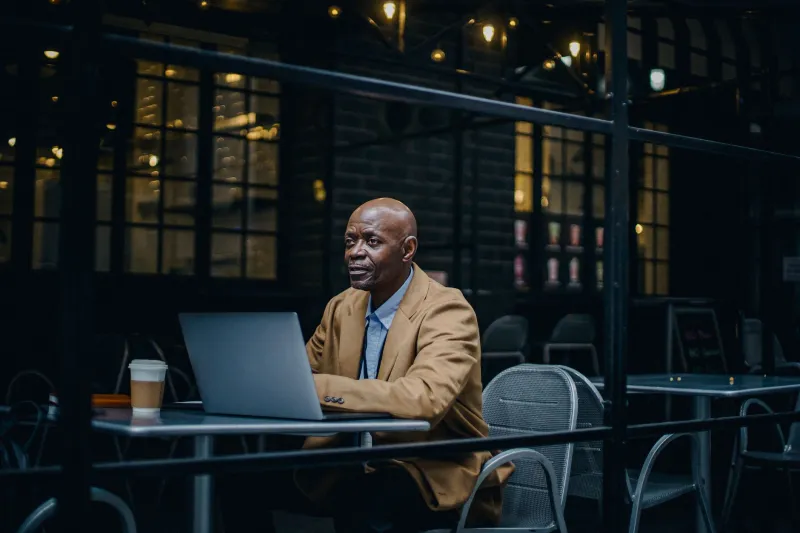
Brandon Cho left a product management role at a mid-sized San Francisco tech company in 2021 with a LinkedIn profile that looked like a highlight reel. Three promotions in six years. A team of twelve. Stock options that were, as he puts it, "theoretically interesting." He was, by most American professional metrics, crushing it.
He now works about 25 hours a week from a quiet apartment in Azabu-Juban, consulting for two clients he genuinely likes, making roughly half what he used to, and — this is the part that trips people up — he cannot stop smiling about it.
"I keep waiting to feel like I made a mistake," Brandon says over coffee, glancing out at a narrow street where a woman is meticulously sweeping the sidewalk in front of her shop. "It hasn't happened yet."
Brandon is not an anomaly. Across Tokyo's expat communities, a quiet but notable pattern is emerging: American professionals are deliberately shrinking their careers. Not because they bombed out. Not because the market forced their hand. They're doing it on purpose, with open eyes, and a lot of them are happier than they've ever been.
The Math That Doesn't Add Up (Until It Does)
On paper, the Azabu downshift makes no financial sense. Tokyo is expensive. A decent apartment in a neighborhood like Azabu or Hiroo will run you serious money. Add in the cost of navigating a foreign city — language classes, the occasional translation service, the very specific tax headaches that come with being an American abroad — and you're looking at a lifestyle that demands real resources.
So why are people doing it?
The answer, if you talk to enough of them, comes back to a concept that resists easy translation but feels immediately recognizable once you've spent time in the city: the idea that your time and your output are not the same thing.
American work culture has spent decades conflating the two. Busyness became a status symbol. Overwork became a personality trait. The 40-hour week became a floor, not a ceiling. Tokyo — and particularly the quieter, more composed corners of it — has a way of making that whole framework feel slightly absurd.
"Nobody here is performing exhaustion," says Maya Ostrowski, a freelance UX writer who relocated from New York two years ago. "In my old office, people would compete over who slept less. Here, if you told someone you only slept five hours because of work, they'd look at you like you had a problem. And they'd be right."
Maya now works roughly 30 hours a week, takes actual lunch breaks, and has started spending Saturday mornings at a ceramics class in Minami-Azabu. Her income dropped significantly. She's also, she says, the most productive she's ever been.
Structure Over Hustle
What Tokyo seems to offer — at least to the Americans who are paying attention — isn't laziness. It's structure. The city runs on a kind of quiet precision that has a way of reorganizing how you think about effort.
Trains arrive exactly when they're supposed to. Shops close when they say they'll close. There's a social understanding here that doing your job well and going home is not a failure of ambition — it's the whole point.
For Americans conditioned to treat their careers as their primary identity, that reframe can be genuinely disorienting at first. And then, for many, it becomes the most liberating thing they've ever experienced.
James Whitfield, a small business owner who runs a boutique copywriting agency from his home office in Roppongi Hills, describes his first six months in Tokyo as "a slow deprogramming."
"I'd finish my work at 5pm and just sit there feeling guilty," he laughs. "Like I was doing something wrong. It took me months to understand that I wasn't slacking — I was just done. The work was done. That was allowed."
James now structures his days around work blocks in the morning, a long walk through the neighborhood at midday, and afternoons that he protects fiercely. His business revenue is lower than it was in Chicago. His client satisfaction scores, he says, have never been higher.
The Privilege Problem
It would be dishonest to write about this phenomenon without acknowledging the obvious: this is not a choice available to most people.
The Americans doing this tend to share a specific profile. They arrived with savings, marketable remote skills, or an existing client base. They have the kind of professional flexibility that comes from years of building a reputation in a high-demand field. The downshift works, in part, because they had enough runway to absorb the income hit.
"I'm aware of how this sounds," says Brandon, who grew up in a working-class household in Ohio. "I didn't have the option to do this at 25. I had to grind first. And I think that's worth being honest about."
There's also the long-game question. Tokyo is wonderful, but it isn't forever for everyone. What happens when these professionals eventually return to US job markets that still expect 60-hour weeks and the performance of relentless ambition? Will a deliberately thinned resume and a philosophy of intentional slowness translate back home?
Maya thinks about this occasionally. Her answer is measured: "Maybe I'll have to adjust. But I think I'll also know something that most of my competitors don't — what it actually feels like to do good work without destroying yourself. That has to count for something."
What Tokyo Keeps Teaching
The Americans who stick around long enough tend to describe a similar arc. The first few months are disorienting. The middle stretch is revelatory. And then, somewhere around year two, it stops feeling like an experiment and starts feeling like a life.
Azabu, in particular, has a way of reinforcing the slower rhythm. It's not a neighborhood that rewards spectacle. It rewards attention. The best ramen spot doesn't advertise. The best dry cleaner has no website. The best things here take time to find, and they're worth finding.
That sensibility — that quality is quiet, that the best things don't announce themselves — has a way of bleeding into how people approach their work.
"I used to optimize everything for visibility," says James. "For the appearance of success. Here, I just try to do things well. It turns out those are really different projects."
Whether this is a sustainable career philosophy or a beautiful detour, only time will tell. But for the Americans who've found it, the math — the real math, the one that counts hours slept and afternoons reclaimed and mornings that don't start with dread — is starting to look pretty good.