Why American Expats in Azabu Stop Answering Their Phones — and Never Look Back

Katie Morrow moved to Azabu-Juban three years ago with two active group chats, a streak on Snapchat she'd maintained since 2019, and a deeply American belief that not texting back within the hour was basically a personal insult. Eighteen months later, she let the streak die. The group chats went on mute. She started replying to her mom every few days instead of every few minutes.
"And honestly?" she says, sitting in a low-lit kissaten near Roppongi-Itchome station, both hands around a ceramic cup. "My relationships are better than they've ever been."
This is the Azabu communication paradox — the thing that surprises almost every American who lands in this particular pocket of Tokyo and stays long enough to feel it set in. A neighborhood known for discretion, quiet money, and a pervasive sense that broadcasting yourself is slightly embarrassing starts to rewire the way you connect with other people. Not just the people around you in Japan. The people you left behind.
The Neighborhood That Doesn't Perform
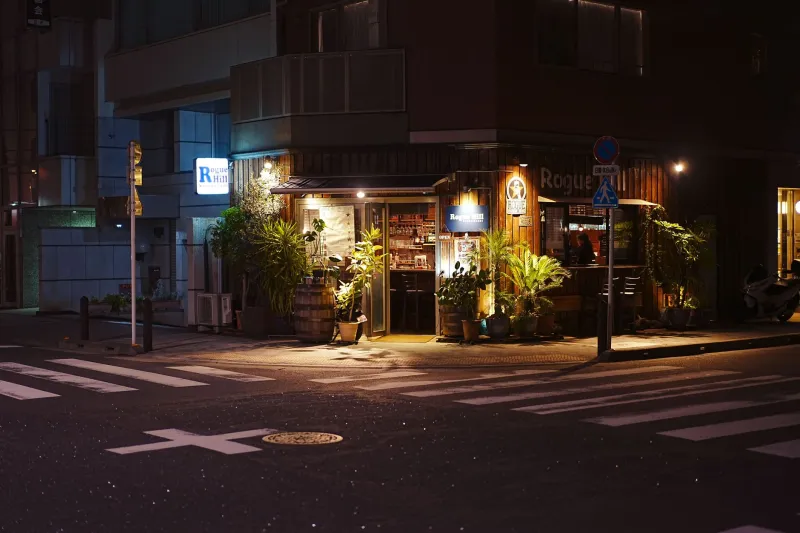
Azabu isn't a place that announces itself. There are no neon signs fighting for your attention, no storefronts screaming about deals. The embassies sit behind hedges. The restaurants don't have Yelp pages. Even the convenience stores feel somehow more subdued than anywhere else in the city.
For Americans accustomed to a culture where visibility is currency — where the Instagram story, the LinkedIn update, and the group text are all forms of social maintenance — this environment is disorienting at first. Then, for many, it becomes a relief.
"I think the neighborhood gives you permission to stop performing," says Derek Tanaka, a 38-year-old product manager from Seattle who's been in Azabu for four years. "Back home, I was always communicating to signal something. That I was busy, that I was fun, that I was keeping up. Here, nobody cares about any of that. And slowly you stop caring too."
What follows, for a lot of expats, is a gradual but significant restructuring of how they communicate. The response windows get longer. The messages get shorter but more considered. The performative check-ins — the "thinking of you!" texts that weren't really about the other person at all — quietly disappear.
Not a Detox. Something Deeper.
It would be easy to file this under "digital detox," the wellness trend that's been cycling through American media for the better part of a decade. But expats here push back on that framing. A digital detox implies deprivation, a temporary sacrifice. What they're describing feels more like a permanent recalibration.
"A detox is when you put your phone in a drawer for the weekend and then go right back to doomscrolling," says Priya Nair, a 34-year-old attorney originally from Chicago who relocated to Azabu two years ago. "What happened to me was different. I just... lost the compulsion. Tokyo doesn't reward the noise. So you stop making it."
Part of what drives this shift is cultural osmosis. Japan has its own complex relationship with communication — one built on indirectness, timing, and the weight of what goes unsaid. Spending time in that environment doesn't make Americans suddenly fluent in Japanese social codes, but it does erode the assumption that more communication is always better.
There's also a practical layer. Many expats in Azabu are operating across significant time zones, which naturally creates gaps in availability. But rather than filling those gaps with anxious catch-up messaging, a lot of residents find themselves leaning into them. The gap becomes intentional. The silence becomes a feature, not a bug.
The Fallout Back Home
Not everyone on the receiving end of this shift finds it charming. Friends and family in the US sometimes interpret the longer response times, the dropped group chats, the increasingly selective communication as distance — emotional, not just geographic.
"My college friends thought I was going through something," says Morrow, laughing. "They staged what I can only describe as a very gentle intervention over FaceTime. They were like, are you okay? You haven't posted anything in three months." She pauses. "I was more okay than I'd been in years."
This friction is real, and expats navigate it with varying degrees of success. Some make deliberate efforts to translate their new habits into terms their American networks can understand — scheduling calls rather than texting reactively, being explicit about the time zone math, explaining rather than just going quiet. Others find the gap quietly self-selecting, with friendships that depended on volume fading while the ones built on actual substance get stronger.
"I have fewer friends now than I did when I left San Francisco," says Tanaka, without apparent regret. "But the ones I have are people I actually want to talk to. And when we do talk, it means something. That trade feels worth it."
What Tokyo Is Actually Teaching About Connection
The deeper thing Azabu seems to offer — and this is something that takes time to articulate — is a different model of what connection is supposed to feel like. American social culture, particularly in the post-smartphone era, has become heavily transactional. Communication is maintenance. Presence is measured in response time. Friendship is something you have to keep feeding, constantly, or it dies.
Tokyo, and Azabu specifically, offers a counterargument. Relationships here can go quiet without collapsing. People can be close without being constantly in contact. Trust doesn't require constant proof of itself.
"There's a Japanese concept I kept encountering — this idea that showing up fully when you do show up matters more than always being halfway present," says Nair. "I started applying that to my relationships back home. Fewer texts, but better ones. Less often, but actually there when it counts."
Whether that's cultural wisdom or convenient rationalization probably depends on who's being left on read. But for the Americans who've made Azabu their home, the silence doesn't feel like absence. It feels, for the first time, like enough.