Leaving the Couch Behind: Why American Therapists Are Finding Their Calling in Tokyo

There's a particular kind of exhaustion that only therapists seem to understand. It's not the emotional weight of sitting with someone else's pain — most of them signed up for that part knowingly. It's the other stuff. The prior authorizations. The 45-minute sessions that are really 37 minutes once you factor in notes. The insurance company that decides, from a cubicle in Ohio, whether your client's trauma is severe enough to keep treating. Ask any therapist who burned out in the American system and they'll describe a version of the same story.
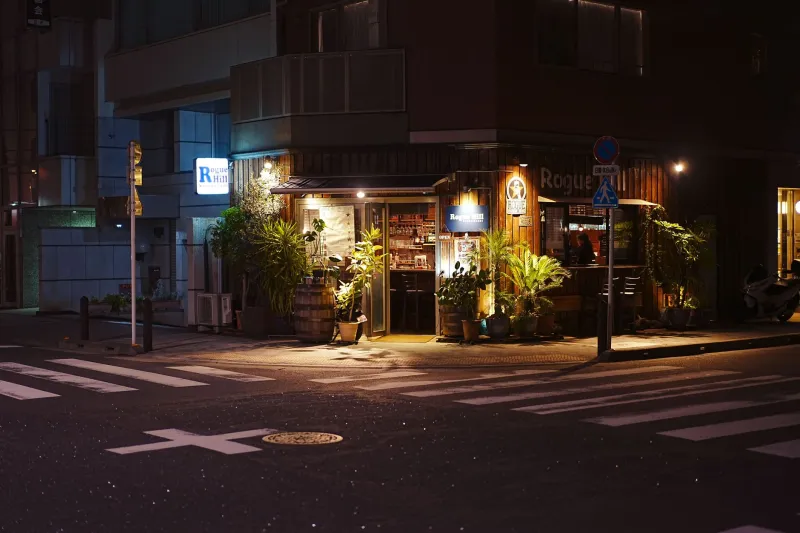
So when you hear that a small but notable number of licensed American therapists have relocated to Azabu — one of Tokyo's quietest, most understated neighborhoods — and are building practices there from scratch, it sounds almost too on-the-nose. Trading burnout for a place famous for its calm? Sure. But what's actually happening is more complicated, and frankly more interesting, than a simple escape narrative.
The Insurance Problem Nobody Talks About Loudly Enough
In the U.S., mental health care is theoretically more accessible than ever. Telehealth exploded. Apps multiplied. The stigma conversation has shifted, at least on the surface. But for the therapists providing that care, the infrastructure hasn't kept pace with the cultural moment.
Many licensed clinical social workers and psychologists operating within the insurance system see anywhere from 25 to 35 clients a week just to make ends meet. That's not therapy — that's triage. The paperwork burden alone can consume hours that should be spent on continuing education, supervision, or, you know, rest. And the reimbursement rates set by major insurers often haven't meaningfully budged in years, even as the cost of maintaining a private practice has climbed.
Several American therapists now practicing in or around Azabu describe a breaking point — a moment when they realized the system wasn't just inconvenient, it was actively interfering with the quality of care they could provide. One licensed psychologist who relocated from Chicago put it plainly: "I was spending more mental energy fighting with insurance companies than I was actually being present for my clients. That's not why I went to grad school."
Why Azabu, Specifically
Tokyo has a growing expatriate community, and with it, a genuine demand for English-language mental health services. That part isn't surprising. What's more interesting is why therapists who could work anywhere — who could set up a cash-pay telehealth practice from literally any city — are choosing to plant themselves physically in a neighborhood like Azabu.
Part of it is practical. Azabu has long been home to diplomats, international executives, and a cosmopolitan mix of long-term expats who have the financial means and cultural inclination to invest in therapy as a regular practice rather than a crisis intervention. The client pool skews toward people who see mental health support as maintenance, not emergency care — which happens to be the model most therapists prefer working within.
But there's something less tangible at play, too. Therapists who've spent time in Japan describe a shift in how they approach their work once they're embedded in the culture. Japan has its own complex relationship with mental health — stigma exists, introspection is often private and guarded — but there's also a cultural seriousness about process, about doing things with care and intention, that resonates with therapists who felt rushed and undervalued back home.
"There's something about being in a place that takes craft seriously," said one marriage and family therapist originally from Portland, now based in Minato ward. "Even watching how a ramen shop operates with such attention to detail — it sounds silly, but it reminded me what it feels like to care about the quality of what you're doing, not just the volume."
The Outsider Advantage
Here's the paradox that keeps coming up in conversations with American therapists in Tokyo: being an outsider, in a foreign country where they don't fully belong, has made them better at their jobs.
In the U.S., therapists often carry invisible social weight with their clients — shared cultural assumptions, overlapping social networks in smaller cities, the subtle power dynamics of being a credentialed professional in a familiar setting. In Tokyo, that context evaporates. The American therapist working in Azabu is, in some ways, as much a fish out of water as their expat clients. That shared displacement creates an unexpected leveling effect.
Clients who've struggled to open up in traditional American therapy settings describe feeling oddly safer with a therapist who is also navigating cultural difference, language barriers, and the particular loneliness of building a life somewhere unfamiliar. The therapist's outsider status becomes a bridge rather than a barrier.
There's also the matter of shame — a concept that operates differently in Japanese culture than in American therapeutic frameworks. American therapy has increasingly moved toward shame resilience as a central concept, popularized in part by researchers like Brené Brown. But practicing in Japan, surrounded by a culture where shame functions as a deeply embedded social mechanism rather than simply a wound to be healed, has pushed some American therapists to develop more nuanced approaches. They're not importing American frameworks wholesale. They're adapting.
Building a Practice Without a Safety Net
None of this is easy, and the therapists making it work are clear about that. Licensing is complicated — Japanese law doesn't recognize American clinical licenses the way European countries might recognize certain credentials, so most practitioners operate within specific legal frameworks, often serving expat populations explicitly or working under organizational umbrellas like international schools or corporate wellness programs.
Building a client base from scratch in a foreign city, without referral networks or insurance panels to funnel clients your way, requires a different kind of hustle. Word of mouth moves slowly in a community that values discretion. Trust takes longer to build. Some therapists spend their first year in Tokyo barely breaking even.
But the ones who stay describe something that sounds almost foreign by American professional standards: the feeling of doing their job well. Smaller caseloads mean more preparation, more presence, more actual therapeutic depth. Sessions that run the full hour. Clients they've worked with for years rather than the churn of a high-volume practice.
"I see twelve clients a week now," said one therapist who left a group practice in Los Angeles. "Back home, I was seeing thirty. I make less money. I have more of myself left at the end of the day. I'm not sure that's a hard trade-off."
What This Says About American Mental Health Care
It would be easy to frame this as a lifestyle story — therapists chasing a romanticized version of Tokyo. And sure, Azabu has a way of making the fantasy feel sustainable. But the underlying story is really about structural failure. When trained, experienced mental health professionals feel they have to leave their own country to practice ethically, something has gone wrong at the system level.
The American mental health crisis is real and documented. So is the therapist shortage. The fact that some of the most thoughtful practitioners in the field are quietly relocating to Tokyo — not because Japan has solved mental health care, but because the U.S. system has made meaningful care nearly impossible — is worth sitting with.
Azabu didn't fix anything. It just got out of the way.