Surrounded by Strangers, Finally Not Alone: The Azabu Paradox Rewriting American Friendships
Megan had 847 Facebook friends when she left Chicago. She had a group chat for her college crew, another for her work friends, a third for her neighborhood wine nights, and a fourth that had gone completely silent sometime around 2021. She was, by every measurable standard, connected. She was also, she'll tell you plainly, one of the loneliest people she knew.
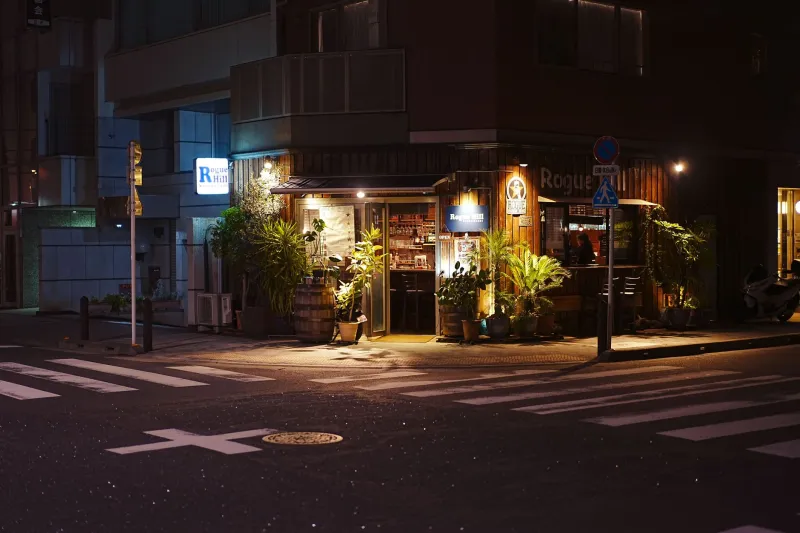
That was three years ago. Now she lives in a fourth-floor apartment in Minami-Azabu, knows maybe twelve people in the city by name, and says — without a trace of irony — that she has never felt less alone in her life.
"I know that sounds insane," she admits, laughing. "I moved to a country where I barely speak the language, where I don't know anyone, where the culture actively discourages small talk. And somehow I feel more seen than I ever did in a city full of people who knew my whole backstory."
Megan isn't an outlier. Talk to enough American expats settled into Azabu's quieter pockets and you start hearing the same story, told in different accents from different starting cities. The loneliness they expected never really showed up. The connection they stopped believing in did.
The Problem With Being Hyperconnected
The United States is in the middle of a loneliness crisis that nobody seems able to fix by adding more apps to their phone. The U.S. Surgeon General issued a formal advisory on it in 2023. Studies keep showing that Americans report fewer close friends, less meaningful daily interaction, and higher rates of social isolation than previous generations — even as social media use climbs year over year.
The cruel joke embedded in all of this is that Americans aren't suffering from a lack of access to other people. They're drowning in it. Networking events, happy hours, LinkedIn connection requests, Instagram DMs, group chats that never sleep. The social calendar is full and the soul is empty. Connection has become a performance, and everyone in the audience is secretly exhausted.
Tokyo, and Azabu specifically, operates on an entirely different social logic. It's a city famous for its culture of solitude — packed trains where nobody makes eye contact, restaurants with single-seat counters designed for one, a deeply ingrained social code that treats unsolicited familiarity as a mild form of rudeness. By American standards, it should feel cold. By the accounts of the Americans who actually live there, it feels like relief.
Quality Over Quantity, Without Even Trying
Part of what happens in Azabu is simple math. When you remove the noise — the obligatory office birthday drinks, the neighbor you wave to but never actually talk to, the college acquaintances who like your posts but wouldn't notice if you disappeared — what's left is smaller. And smaller, it turns out, can be better.
American expats in Tokyo aren't building enormous social networks. They're building tight ones. The expat community in Azabu is dense enough to be navigable but not so large that it fractures into cliques and status hierarchies. People meet through shared circumstance — the same language school, the same Sunday morning coffee spot, the same confused look at a konbini register — and those origin stories tend to stick.
"Back in New York, I met people constantly," says Derek, a former finance guy who relocated to Azabu eighteen months ago. "But meeting people and actually knowing people are completely different things. Here, when I make a friend, it feels like I actually made a friend. There's no agenda. Nobody's trying to network their way into something."
That absence of agenda matters more than it might sound. American social culture is saturated with transactional undertones — friendships that double as professional connections, invitations with implied reciprocity, conversations that circle back to what you do and who you know. Tokyo's social culture, at least as experienced by outsiders navigating it slowly and carefully, strips most of that away. What remains is just people, being present with each other, because they chose to be.
The Role of Ritual
There's something else going on too, and it has to do with how Tokyo structures social interaction around ritual rather than spontaneity. The standing ramen counter where you eat alone but in companionable silence with strangers. The neighborhood izakaya where the regulars acknowledge each other without needing to perform. The shared understanding that showing up consistently — to the same place, at the same time, week after week — is its own form of social commitment.
Americans are accustomed to treating spontaneity as a virtue. The best hangouts are the ones that just happen, the friendships that feel effortless, the plans that come together at the last minute. Tokyo gently suggests that this is, at minimum, not the only way. That intention — the deliberate, repeated act of showing up — might actually be a more honest expression of care than the casual, low-stakes availability that American social culture prizes.
"There's this place near me where I get coffee every Saturday morning," says Priya, a UX designer who moved from San Francisco two years ago. "The owner doesn't speak much English and my Japanese is still terrible. But he knows my order, he nods when I walk in, and we've had maybe thirty wordless Saturday mornings together. That sounds like nothing. It feels like something."
What Americans Are Bringing Back
Not everyone who lands in Azabu stays. Some come for a year, some for two, and then life pulls them back west. But the ones who return to the U.S. tend to carry something different with them — a recalibrated sense of what connection actually requires.
They stop RSVPing yes to things they don't mean. They start being more deliberate about who gets their time and energy. They trade the sprawling, shallow social calendar for a smaller, more intentional version of it. They stop mistaking noise for warmth.
The loneliness crisis in America is real and it's complicated, and no amount of time in a Tokyo neighborhood is going to fix it at scale. But the Americans who've lived through the Azabu paradox — who moved somewhere quieter and lonelier on paper and came out the other side feeling more genuinely connected — are walking proof that the problem was never really about access.
It was about attention. About choosing depth over volume. About being present in a world that's constantly offering you somewhere else to be.
Megan still has the group chats. She just doesn't check them as often anymore. "I have four people here I'd call at two in the morning," she says. "In Chicago, I had eight hundred and I'm not sure I had one."
Something about that math feels worth paying attention to.