Silence as Strategy: How a Tokyo Neighborhood Is Changing the Way American CEOs Think
For decades, the American executive playbook looked pretty much the same. You flew to Davos, or Vegas, or some resort in Scottsdale with a golf course and a keynote speaker. You networked over open bars, collected business cards, and flew home feeling vaguely important and completely exhausted. The conference was the thing. Being seen at the conference was the thing.
Something is quietly disrupting that formula — and the disruption is coming, of all places, from a residential neighborhood in southwest Tokyo.
The Neighborhood That Rewired the Rulebook
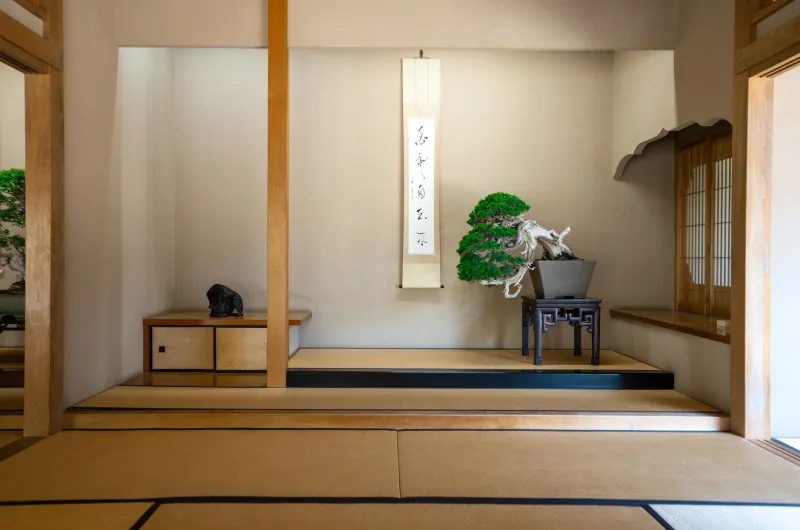
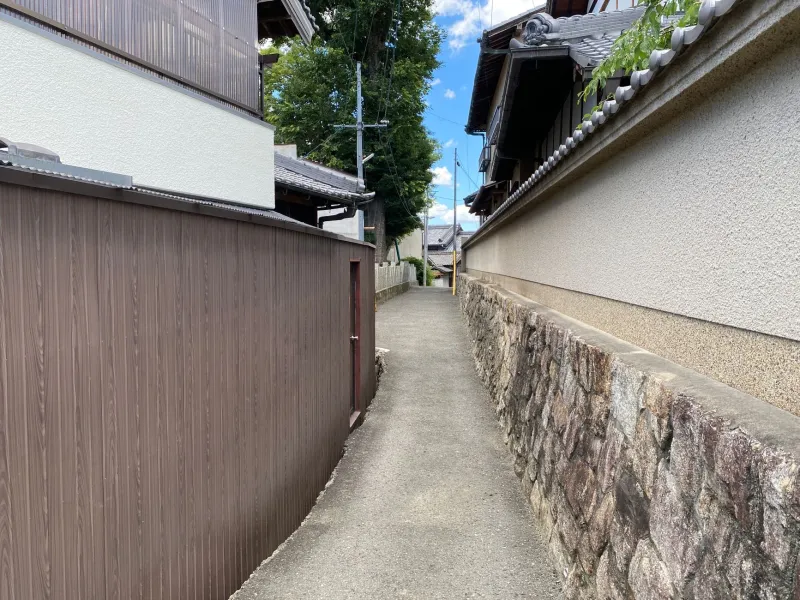
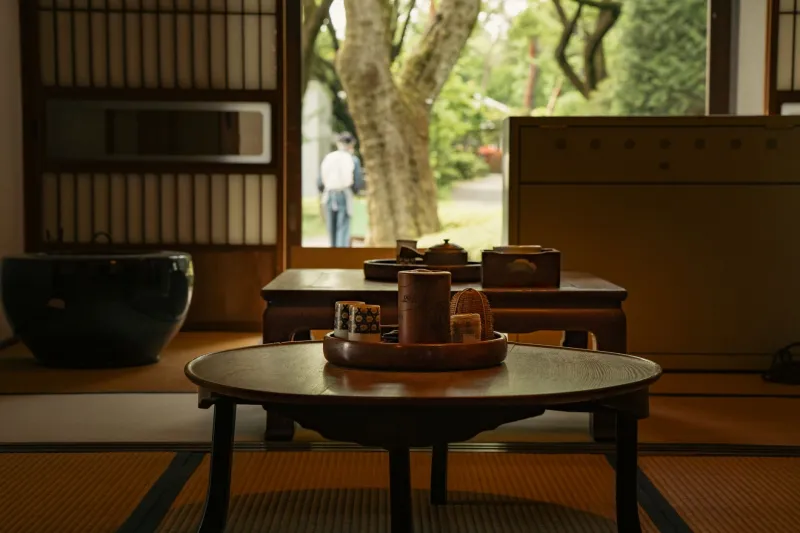
Azabu doesn't announce itself. There are no billboards, no tourist traps, no neon. It's the kind of place where a former hedge fund manager can walk to a kissaten coffee shop at 7 a.m. and sit undisturbed for two hours with nothing but a ceramic cup and his own thoughts. That's not an accident. It's a feature.
Americans who've spent time living or working in Azabu — and there are more of them than you'd expect, given the neighborhood's reputation as a quiet enclave for Tokyo's diplomatic and finance community — talk about the place with a reverence that sounds almost spiritual. The streets are narrow and deliberately unhurried. The noise ordinances are real. Even the convenience stores feel somehow calmer than their counterparts in Shibuya or Shinjuku.
"I went there for a three-week work trip and came back a different person," says Marcus Delray, a Chicago-based operations executive who visited Tokyo on a corporate assignment two years ago. "I started waking up earlier. I stopped checking my phone every four minutes. I actually thought about hard problems instead of just reacting to them."
Delray is now one of a growing number of American business leaders who schedule what they're calling "thinking retreats" — intentional periods of low stimulation, limited connectivity, and structured solitude — into their quarterly calendars. Some do it domestically, renting cabins in Vermont or the Oregon coast. But a notable subset specifically point to their time in Azabu as the experience that convinced them the practice was worth taking seriously.
The Neuroscience Backing the Quiet
It would be easy to dismiss this as another wellness trend dressed up in executive language. But the science is increasingly hard to argue with.
Dr. Priya Nanthakumar, a cognitive neuroscientist at UCLA who studies decision-making under cognitive load, says the American workplace has essentially been running a decades-long experiment in overstimulation — and the results are not great. "When your brain is constantly processing incoming information — emails, Slack messages, news alerts, meetings — it never gets the chance to consolidate. You lose the ability to think in long arcs. You start optimizing for the short term because that's all your neural architecture has bandwidth for."
What the brain needs, she explains, is something called the default mode network — a state of mental activity that kicks in during periods of quiet and apparent idleness. It's when your mind wanders that it actually does some of its most sophisticated work: drawing connections between disparate ideas, running simulations about future scenarios, processing emotional complexity. "This is literally where strategic thinking lives," Nanthakumar says. "And we've built a work culture that systematically prevents people from accessing it."
The irony, she adds, is that the executives who most need this cognitive space are often the ones with the most overstuffed calendars.
From Azabu to the American Boardroom
So how does a quiet Tokyo neighborhood become a corporate strategy tool?
Partly it's about the Americans who experienced it firsthand and came home changed. Partly it's about productivity coaches and executive consultants who've started incorporating "environmental design" into their client work — helping leaders deliberately shape their physical surroundings to support deeper thinking. And partly it's about a growing backlash against the Silicon Valley gospel of perpetual motion.
Jennifer Lau, an executive coach based in San Francisco who works with founders and C-suite leaders, started recommending international thinking retreats to clients about three years ago. Tokyo — and specifically Azabu — came up organically. "Several of my clients had been there and kept describing the same thing: this feeling of the noise just... stopping. Not in a boring way. In a clarifying way." She now includes a section on what she calls "the Azabu principle" in her leadership workshops. The idea is simple: build deliberate pockets of under-stimulation into your schedule the way you'd build in any other strategic resource.
"The conference model assumes that density of input equals quality of output," Lau says. "But that's not how the brain works. More information doesn't automatically mean better decisions. Sometimes it means worse ones."
The retreat format she recommends isn't about meditation or wellness, necessarily — though those elements often show up. It's about creating conditions where executives can think about their hardest problems without interruption. No panels. No networking dinners. No keynotes. Just time, a notebook, and whatever cognitive breathing room the environment can provide.
Challenging the Always-On Gospel
For a certain generation of American executives, this is still a hard sell. The always-on culture that Silicon Valley exported to the rest of corporate America for the better part of twenty years treated busyness as a proxy for importance. Being unreachable was a liability. Downtime was something you squeezed into the margins, if at all.
That ethos is starting to crack — slowly, unevenly, but visibly. High-profile burnouts have made headlines. Turnover at senior levels is prompting companies to rethink what sustainable leadership actually looks like. And a handful of CEOs who've gone public about their thinking retreat practices — including scheduled offline periods and international solitude trips — have found that the response from employees and investors is more positive than they expected.
"Nobody came back and said I was being irresponsible," says one tech founder, who asked not to be named, describing a ten-day solo trip to Japan that included several days in Azabu. "People mostly said they wished they could do the same thing."
That response probably says something about where corporate culture is actually headed, even if it hasn't fully arrived yet.
What the Shift Actually Looks Like
In practice, the thinking retreat movement looks less like a formal program and more like a quiet reallocation of executive time. Some leaders block a week per quarter with nothing scheduled. Others travel specifically to low-stimulation environments — rural Japan, coastal Portugal, the Sonoran Desert — and treat the trip as a working offsite with a party of one.
What they're all chasing, in different ways, is the thing that Azabu seems to offer almost by accident: an environment that doesn't compete for your attention. Streets that don't demand anything from you. A pace that gives your brain room to catch up with itself.
It's a strange thing, that a neighborhood in Tokyo — one that most Americans have never heard of — is quietly influencing how some of the country's most powerful business minds structure their time. But then again, the best ideas rarely announce themselves loudly.
Sometimes they arrive in the quiet.