Bored on Purpose: How Young Americans in Tokyo Are Using Empty Space to Finally Feel Something Real
Somewhere between the third scroll of the morning and the fourth podcast episode of the commute, something broke for Dani Kowalczyk. The 24-year-old from Columbus, Ohio had a full Notion board, a packed Spotify queue, a Duolingo streak she guarded like a second job, and a persistent, low-grade feeling that she was absolutely exhausted by her own life.
"I was optimizing everything," she says, sitting in a quiet Azabu Juban café that doesn't have its own Instagram account and seems quietly proud of that fact. "And I still felt completely empty. Which is wild, because I was never actually empty. I never let myself be."
She moved to Tokyo eight months ago on a remote content strategy contract. She expected to find a city that matched her pace. Instead, she found 'ma.'
What Even Is 'Ma'?
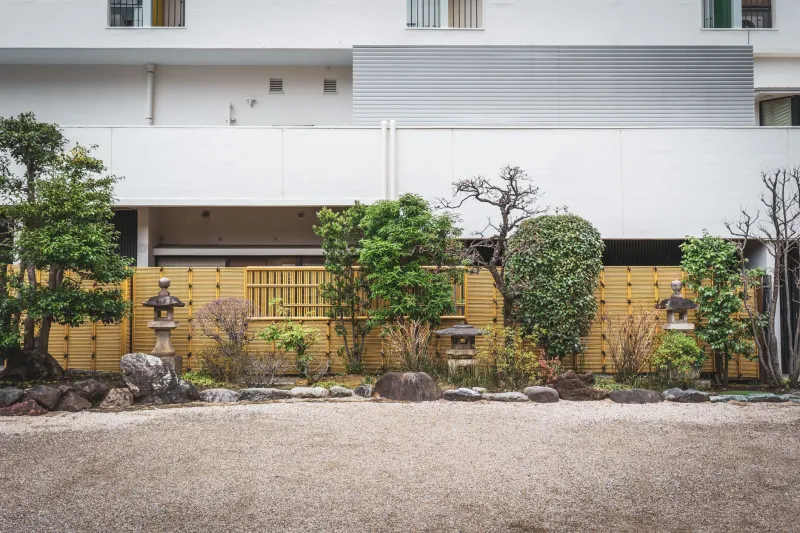
If you've spent time around Japanese art, architecture, or music, you've probably felt ma without knowing its name. It's the pause between notes in a shamisen melody. The negative space in a sumi-e ink painting. The deliberate gap between two garden stones. The silence a good host lets breathe before responding.
In Japanese, 間 (ma) loosely translates to "gap," "pause," or "interval" — but that translation flattens it. Ma isn't accidental emptiness. It's emptiness with intention. It's the idea that what you don't fill is just as meaningful as what you do.
For a generation that grew up treating silence like a bug rather than a feature, that's a genuinely radical concept.
"In the States, if you're not producing something, you feel like you're falling behind," says Marcus Elleray, 26, a UX designer from Austin who's been based in Tokyo for just over a year. "There's this ambient guilt that follows you around. Like, you could be learning a skill right now. You could be networking. You could be optimizing." He pauses, glances out the window at a narrow Azabu street where almost nothing is happening. "Here, I started noticing that the nothing was actually doing something."
The Overstimulation Hangover Is Real
American Gen Z didn't invent busyness, but they inherited a particularly aggressive version of it. They came of age inside an attention economy specifically engineered to eliminate idle moments. TikTok autoplays. Instagram reels loop. Notifications are calibrated to hit dopamine receptors like a Pavlovian slot machine. Even "wellness" got gamified — meditation apps with streaks, sleep trackers with scores, journaling prompts that arrive on a schedule.
The result, according to a growing number of researchers and therapists, is a generation that's deeply uncomfortable with unstructured time — and paying for it cognitively and emotionally. A 2023 survey from the American Psychological Association found that Gen Z reported the highest rates of stress and the lowest rates of mental health satisfaction of any adult age group. Plenty of factors feed into that, but chronic overstimulation keeps showing up in the conversation.
Tokyo, and Azabu specifically, offers an unlikely corrective.
"This neighborhood doesn't perform for you," says Kowalczyk. "It's not trying to be charming. It's not trying to go viral. It just exists, and somehow that gave me permission to just exist too."
Finding the Gaps
For the young Americans who've stumbled into ma — usually by accident, often through simple proximity to Japanese daily life — the shift tends to happen in small, almost embarrassing moments.
Elleray describes standing on a train platform and realizing he'd left his AirPods at home. His first instinct was panic. Then the train didn't come for four minutes, and he just... stood there. Watched a pigeon. Noticed how the afternoon light was doing something interesting on the platform tiles. "I felt this weird thing I eventually identified as calm," he says. "I hadn't felt that without being asleep in probably two years."
Jordan Fitch, 23, a freelance photographer from Portland, started noticing ma in her actual work. She'd been grinding out content — shooting, editing, posting, repeat — and everything she produced felt the same. After a few months of wandering Azabu's quieter side streets without an agenda, she started shooting differently. Fewer subjects. More space around them. "I started leaving room in the frame," she says. "And people kept telling me my work suddenly had this quality they couldn't describe. I knew what it was, though."
She's not alone in finding that creative output improved when she stopped cramming her brain full of input. There's a growing body of research supporting the idea that boredom and mental downtime are essential to creative cognition — that the brain's "default mode network," active during rest and mind-wandering, is actually doing some of its most important associative work when we think we're doing nothing.
Ma, it turns out, has neuroscience on its side.
It's Not Minimalism (It's Different)
It's worth drawing a line here, because ma often gets lumped in with the minimalism trend that American lifestyle culture has been chewing on for a decade. They're related, but they're not the same thing.
Minimalism, as it landed in the US, became largely aesthetic — fewer objects, cleaner shelves, a capsule wardrobe. It was still, at its core, about having things, just fewer of them. Ma is less about what you own and more about how you move through time. It's the pause in a conversation you don't rush to fill. The Sunday afternoon you don't schedule. The commute you take without earbuds.
"Minimalism felt like another thing to optimize," Kowalczyk says, a little wryly. "Like, now I have to optimize my stuff too? Ma feels more like... permission to not optimize. To let some things be unresolved."
Bringing It Back, Sort Of
None of the people I spoke with are under any illusion that they'll return to the US and find ma waiting for them. American culture, they acknowledge, is structurally hostile to purposeful emptiness. The economy runs on attention. Social life runs on plans. Even friendship, increasingly, gets scheduled into Google Calendar slots.
But they're trying to carry something home anyway.
Elleray talks about building "dead zones" into his workday — 20-minute stretches with no screen, no audio, no input. Fitch has started leaving her phone in another room during the first hour of the morning. Kowalczyk deleted her most compulsive apps and replaced them with, essentially, nothing.
"People keep asking me what I do instead," she laughs. "And I say, I don't know. That's kind of the point."
Ma doesn't translate cleanly. It's not a productivity hack or a wellness protocol. It's closer to a posture — a way of relating to time that treats the gaps as valuable rather than wasteful. In a culture that has monetized every second of human attention, that's not just countercultural. For a burned-out generation that's been dopamine-drenched since middle school, it might be the most radical move available.
Sometimes the most interesting thing you can do is absolutely nothing. Tokyo's been trying to tell us that for a while.