Paying More to Be Seen Less: The Strange Economics of American Life in Azabu
There's a particular kind of exhaustion that sets in after years of performing wealth for an audience that never quite feels satisfied. You upgrade the car, renovate the kitchen, post the vacation. And then you do it all over again, because the algorithm is hungry and so are the neighbors. For a growing number of affluent Americans, the solution to that treadmill wasn't a digital detox or a mindfulness app. It was a one-way ticket to a quiet corner of Tokyo where nobody gives a damn about your net worth.
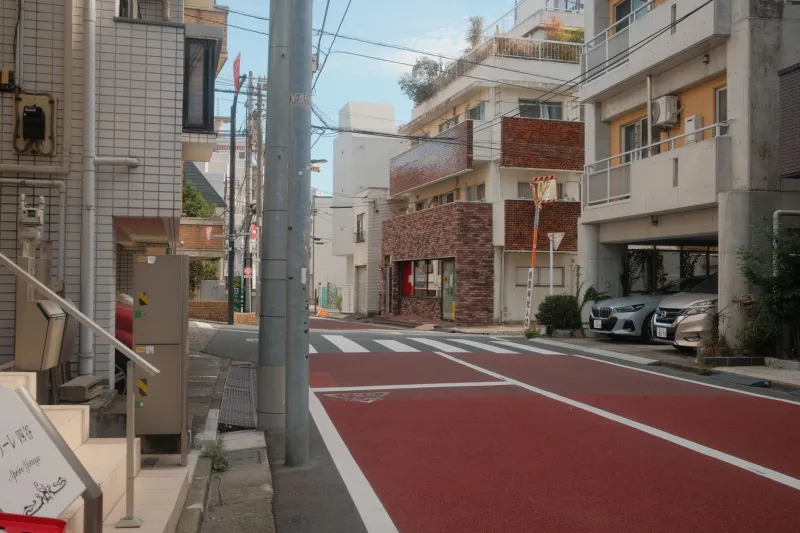
Welcome to Azabu—specifically the triangle of Azabu-Juban, Minami-Azabu, and Nishi-Azabu that has quietly become the unlikely refuge for a certain kind of burned-out American professional. The rents here are brutal. A decent two-bedroom apartment in the area can run anywhere from $4,000 to $8,000 a month, and that's before you factor in the cost of living in one of the world's most expensive cities. So why are people paying Manhattan prices specifically to disappear?
The answer is stranger—and more revealing—than it first appears.
The Performance Tax
In the United States, wealth has always carried a kind of social obligation to be visible. From the McMansions of suburban Texas to the Hamptons share houses of New York finance bros, American affluence tends to announce itself. There's a whole infrastructure built around this: the right neighborhood, the right school district, the right restaurant reservation, the right Instagram grid. Opting out isn't really an option, because opting out reads as failure.
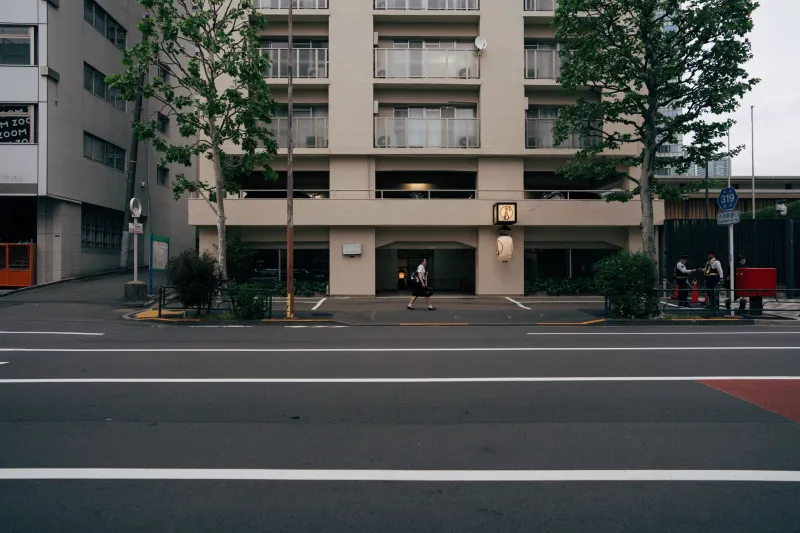
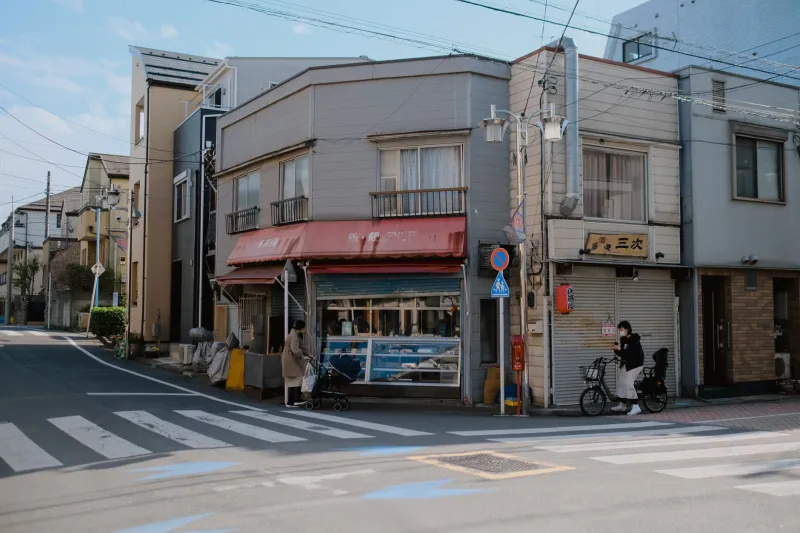
Azabu doesn't operate on those rules. The neighborhood's most expensive homes are tucked behind concrete walls and hedgerows. The people with real money here—Japanese executives, diplomats, the occasional foreign CEO—don't signal it in ways that Americans are trained to recognize. A guy in a plain navy jacket waiting for the crosswalk could be worth $50 million. The woman at the bakery counter in Azabu-Juban might own half a building. You genuinely cannot tell, and more importantly, nobody is trying to help you figure it out.
For Americans who've spent years playing the visibility game, this cultural indifference to status display isn't just refreshing. It's genuinely disorienting at first, and then deeply, almost physically, relieving.
"I kept waiting for someone to clock me," says one American marketing executive who relocated to Minami-Azabu two years ago. "Like, waiting for the social calculation to happen. And it just... didn't. After a while I realized I'd been tensed up for years without knowing it."
What Discretion Actually Costs
Here's the paradox that makes Azabu so interesting from a purely economic standpoint: Americans are paying a significant premium specifically to access a culture of non-performance. The neighborhood is expensive not in spite of its quietness but, increasingly, because of it. Word has spread in certain circles—finance, tech, consulting, creative industries—that Azabu is where you go when you're done with the show.
This has created a self-reinforcing dynamic. The more Americans who arrive specifically seeking anonymity, the more the neighborhood's social culture accommodates that desire. Unlike some expat enclaves in other global cities, the American community in Azabu hasn't colonized the neighborhood with its own visibility rituals. The social scene exists, but it's genuinely low-key—dinner parties in apartments, walks through Arisugawa-no-miya Memorial Park, the occasional gathering at one of the area's understated wine bars.
What you won't find much of is the performative expat lifestyle that dominates other parts of Tokyo. Nobody's particularly interested in curating their Azabu experience for an audience back home. The Americans who end up here tend to be the ones who've already had the audience and found it hollow.
The Psychology of the Invisible Luxury
There's a concept in consumer psychology called "inconspicuous consumption"—the idea that the truly wealthy eventually graduate from visible status symbols to experiences and environments that only insiders can recognize or appreciate. Azabu fits this framework almost too neatly.
The luxury being purchased here isn't a thing or even a lifestyle in the traditional sense. It's a set of cultural conditions: a neighborhood that doesn't ask you to perform, a social environment where your follower count is irrelevant, a daily life that unfolds without the constant low-grade pressure to document and share it. That's the product. The high rent is just the cover charge.
What makes this particularly interesting is that it's not a luxury Americans can easily replicate at home. You can buy a bigger house or a more exclusive club membership, but you can't purchase your way into a culture that fundamentally doesn't share your country's relationship with status display. That's something that has to be imported—or rather, something you have to move toward.
The Irony Nobody Talks About
There is, of course, a delicious irony at the center of all this. The Americans who relocate to Azabu specifically to escape visibility culture often become, in certain American social circles, extremely visible because of it. Moving to Tokyo's most prestigious neighborhood to get off the grid is still, when you tell people about it at a dinner party in Brooklyn or Palo Alto, a kind of flex. The story of opting out is itself a status signal.
Most of the long-term Azabu residents seem aware of this contradiction and have made a kind of peace with it. The point isn't to achieve some pure, performative-free existence—it's to change the daily texture of life, to stop the constant low-level drain of American status maintenance. Whether or not the move reads as impressive back home is, increasingly, not their problem.
"I still have a LinkedIn," one long-term resident laughs. "I'm not, like, off the grid. I just don't feel like I have to prove anything before breakfast anymore."
What Azabu Is Actually Selling
If you strip away all the cultural analysis, what Azabu is offering Americans is essentially this: permission to stop. Permission to exist in a place where your worth isn't being constantly calculated and recalculated by the people around you. That's not nothing. In fact, for a lot of people, it turns out to be worth quite a lot.
The neighborhood will never be cheap, and it will probably get more expensive as its reputation among a certain class of American expat continues to grow. But the core product—a culture of discretion, a city that doesn't care who you were back home—isn't something that can be manufactured or scaled. It's baked into how the neighborhood has always operated.
Which means, for now at least, the Americans paying Tokyo prices for small-town anonymity are getting exactly what they came for. Even if explaining why requires a level of irony they've all learned to live with.